


Influenza (Avian)
Influenza (Avian)
Avian influenza or “bird flu” is a disease of birds caused by type A strains of the influenza virus. It can affect all species of birds, some other animals (e.g. cats, horses) and can very rarely infect humans. Only the virus types of the H5 and H7 types are known to cause the highly pathogenic (HPAI) form of the disease. The most well-known example is the avian influenza subtype H5N1 viruses currently circulating in poultry in parts of Asia and northeast Africa, which have caused human disease and deaths since 1997. Other avian influenza subtypes, including H7N9 and H9N2, have also infected people. Some of these infections have been very severe and some have resulted in deaths, but many infections have been mild or even without symptoms in humans.
For queries relating to dead birds please contact the Department of Agriculture, Food and the Marine
Guidance
Infection Prevention and Control Guidance for the management of suspected/ confirmed High Consequence Infectious Diseases (HCIDs) in Acute Healthcare settings
31, Oct 2025
1.53 MB
Guidance and algorithms for the management of influenza of zoonotic origin (IZO)
Public Health Management of Acute Respiratory Infections (ARI) of Human Influenza of Zoonotic Origin Chapter 3: Cases & Contacts (Human)
29, Jan 2026
1.05 MB
Algorithms
IZO Algorithm 1 - Public Health response to a human exposure of a confirmed/suspected case in an animal (avian or mammalian)
24, Feb 2026
378.04 KB
IZO Algorithm 2 - Management of symptomatic human contacts under public health surveillance
24, Feb 2026
452.84 KB
IZO Algorithm 3 - Management of symptomatic human contacts not under public health surveillance
24, Feb 2026
466.46 KB
Infographics
Step by Step Guide: How to take a nose and throat swab
29, Jan 2026
363.81 KB
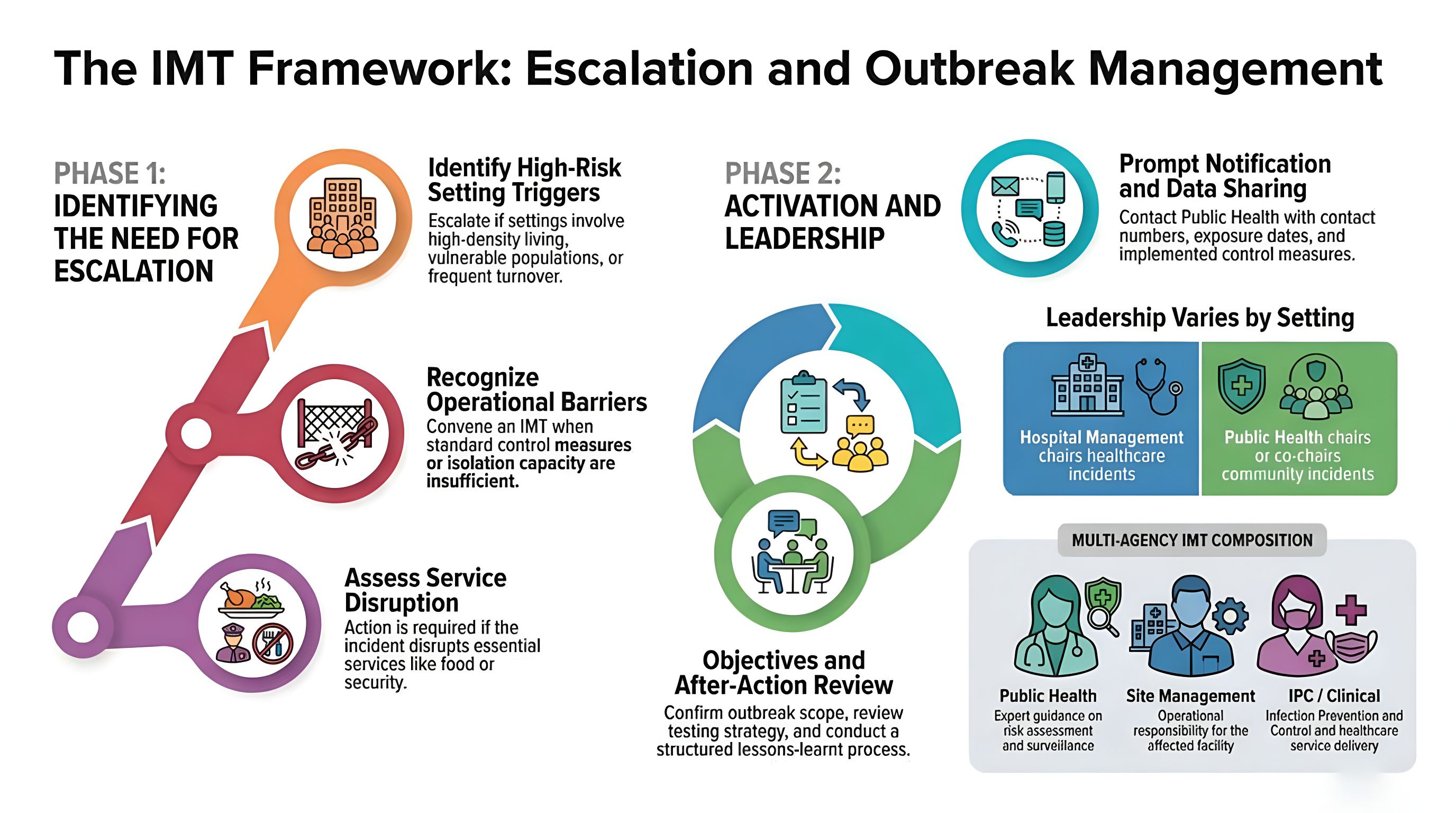
The IMT Framework: Escalation and Outbreak Management
29, Jan 2026
2.09 MB
Templates
For individuals under surveillance (for use by Regional Public Health Departments)
29, Jan 2026
700.55 KB
Information, Data and Reports for Influenza (Avian)

Ireland’s specialist service for the surveillance of communicable diseases.