


Hepatitis C
Hepatitis C
Hepatitis C is a viral infection, which causes inflammation of the liver. It is spread through contact with the blood of an infected person. Sharing injecting needles and other drug-taking equipment with someone who is infected is the most common way to get hepatitis C in Ireland. About 25-30% of people who are infected clear the virus within one year of infection. The remaining 70-75% develop chronic (long-term) infection. This can cause serious liver disease, including cirrhosis (scarring of the liver), liver cancer and liver failure. This liver damage occurs gradually over 20-40 years in people with chronic infection.
Highly effective treatments for hepatitis C became available in Ireland in late 2014. These result in a cure for over 95% of people who are infected. For more information on treatment please see: https://www2.hse.ie/conditions/hepatitis-c/treatment/
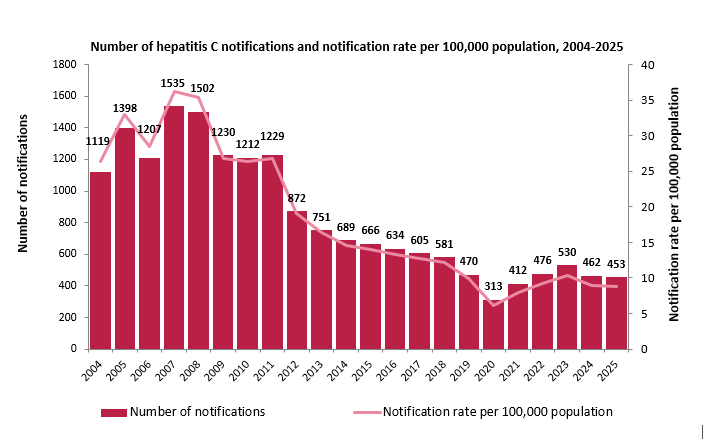
Hepatitis C became a notifiable disease in Ireland in 2004.
Last updated: 29 June 2026
Case Definitions
Hepatitis C infection (Hepatitis C virus)
Clinical criteria for acute or recent hepatitis C infection
Clinical hepatitis within the past 24 months (where other causes of acute hepatitis have been excluded) defined as peak elevated serum alanine aminotransferase (ALT) levels >200 IU/L
Laboratory criteria for acute or recent hepatitis C infection
Definitive evidence
Detection of hepatitis C antibody(anti-HCV) or hepatitis C virus RNA (HCV RNA) or hepatitis C virus antigen (HCV Ag) in a person who has had a negative anti-HCV test recorded within the past 24 months
OR
Detection of HCV RNA or detection of HCV Ag in a person with a documented negative HCV Ag/RNA test within the preceding 24 months (excluding those who are known to have been treated recently and did not achieve a sustained virological response).
OR
Detection of hepatitis C virus with a different genotype/subtype to that previously documented within the past 24 months
OR
Evidence of very recent infection: HCV RNA/HCV Ag positive AND antibody negative
Suggestive evidence
Detection of hepatitis C virus by antigen or nucleic acid testing in a person with no previous hepatitis C test results
Hepatitis C case classification
Clinical case - NA
Probable case - NA
Confirmed hepatitis C infection: acute or recent case
Definitive laboratory evidence
OR
Suggestive laboratory evidence AND clinical criteria fulfilled
Confirmed hepatitis C infection: chronic case
Does not meet criteria for acute or recent hepatitis C infection
AND
Detection of HCV RNA
OR
Detection of HCV Ag
Confirmed hepatitis C infection: unknown classification
Does not meet criteria for "Confirmed acute or recent hepatitis C infection” or "Confirmed chronic hepatitis C infection”
AND
Detection of anti-HCV confirmed by a confirmatory antibody test in persons older than 18 months without evidence of resolved infection*
*Resolved infection: Detection of hepatitis C virus antibody in a person who was also tested for hepatitis C virus RNA or core antigen and found to have an undetectable/negative result. Resolved infections should not be notified.
Last revised: 1 January 2026
Guidance

Hepatitis C Screening: National Clinical Guideline No. 15 Background supporting documents are available to view here.
- HIQA Health Technology Assessment of birth cohort testing for hepatitis C
- Guidelines for the Emergency Management of Injuries (EMI) and Post-Exposure Prophylaxis (PEP)
- Blood-Borne Viruses in the Haemodialysis, CAPD and Renal Transplantation Setting
Hepatitis C Treatment
- Public health plan for the pharmaceutical treatment of hepatitis C, 2014
- National Hepatitis C treatment programme - community treatment guidelines 2023
Addiction and Prison settings
Information, Data and Reports for Hepatitis C

Ireland’s specialist service for the surveillance of communicable diseases.